
The Battle Over the Future of Money

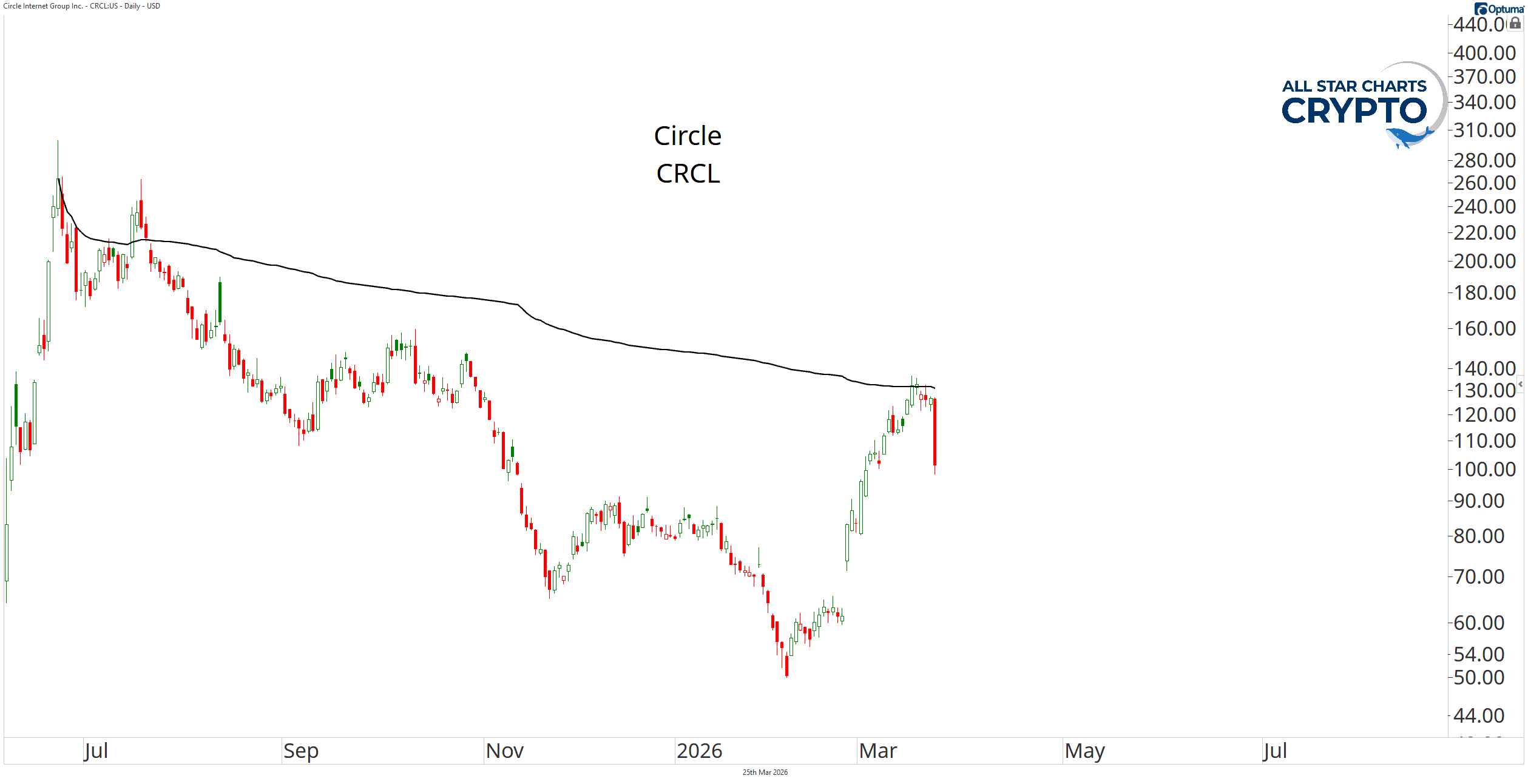
CRCL just had its worst single day since going public. Here's what's actually happening, and why the real story is more nuanced than anyone is telling you.
Two headlines hit the tape this morning. Most people reacted to one and missed the other entirely.
When the GENIUS Act passed last July, it banned stablecoin issuers from paying yield directly to holders. Circle cannot pay you interest on USDC. That's the law.
But the GENIUS Act had a gap. It only covered issuers. Affiliates and exchanges were untouched. So Coinbase, which earns 100% of the reserve yield on USDC held on its platform, simply turned around and passed most of it back to users as a 3.35% APY product. Technically legal. Economically, functionally identical to a savings account paying interest.
The banks noticed. And they've been lobbying hard ever since.
The Clarity Act is the follow-up legislation working through the Senate. Where the GENIUS Act was specifically about stablecoins, the Clarity Act is the broader framework for all digital assets, resolving SEC vs CFTC jurisdiction (securities vs commodities), creating regulatory clarity for the entire industry.
But embedded in it is the unfinished business from the GENIUS Act: closing the affiliate loophole. Draft language leaked yesterday and the wording is aggressive; prohibiting yield "directly or indirectly" and anything "economically or functionally equivalent to interest," covering exchanges, brokers, and affiliated entities. Coinbase's yield product is squarely in the crosshairs.
CRCL closed down 20% yesterday - it's worst day ever.
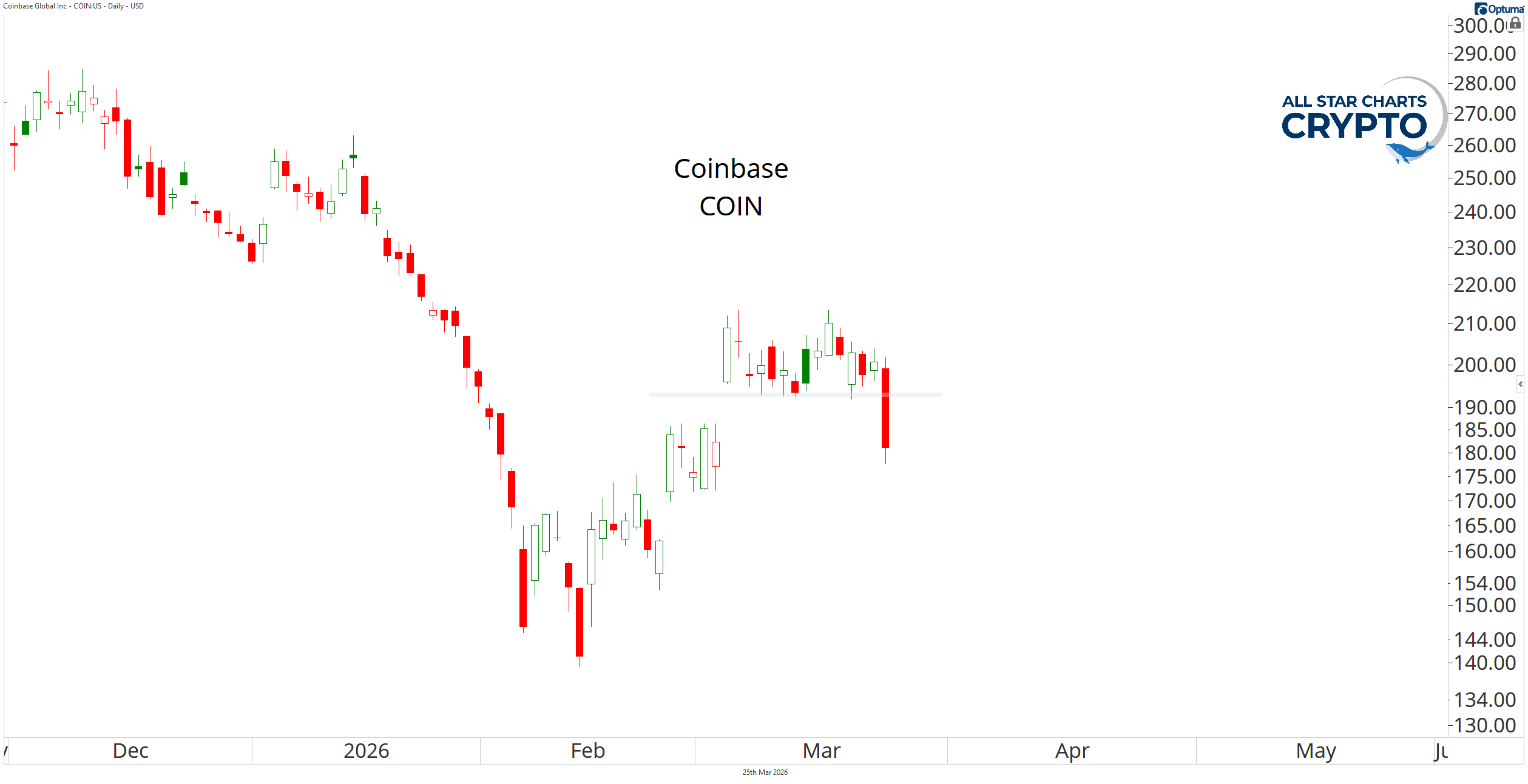
Coinbase was down 10%, also.
But from this story, the whole bank bogeyman narrative is lazy.
The easy take is that big banks are the villain here, protecting their fat margins while trying to kneecap crypto innovation. And yes, banks are lobbying aggressively for their own interests. That's what they're supposed to do.
But the underlying argument deserves more respect than it's getting.
The US runs on fractional reserve banking. When you deposit $100 at a bank, they hold a fraction in reserve and lend out the rest. That $100 deposit eventually creates roughly $1,000 of credit in the economy through mortgages, small business loans, car loans. Banks aren't just custodians of your money, they are engine of credit creation in the economy.
Stablecoins don't work that way. Circle holds your dollar in Treasury bills, earns the yield, and stops there. Full reserve with zero credit creation. If meaningful capital flows out of bank savings accounts and into stablecoins, you don't just shrink bank margins, you shrink the economy's capacity to lend. That's a real macroeconomic consequence and almost nobody is talking about it.
Now, is the banking lobby using this legitimate concern to protect a spread that modern technology should have eroded years ago? Absolutely. Your savings account earns 0.5% while the bank earns 4%+ on your money. For that 3.5% margin you get FDIC insurance, fraud protection, debit cards, and the assurance that your deposits are safe even if the institution fails. Those services are real. They also don't cost anywhere near 3.5% to deliver. Stablecoins are the first genuine structural threat to that arrangement in a generation, and the banks know it.
Both things are true. The macro concern is legitimate. The lobbying is also self-interested. Holding both in your head at once is the only honest take.
And while we're at it, let's not pretend crypto companies are any different. The narrative that banks are greedy incumbents protecting turf while crypto crusaders fight for financial freedom is a fairy tale written by people with long positions. Coinbase isn't offering you 3.35% APY out of ideological commitment to open finance. They're doing it to grow USDC market share, deepen platform stickiness, and make their shareholders wealthier. Just like the banks they're disrupting.
Everyone in this fight is acting in their own interest. The banks. The crypto companies. The law firms billing $1,000 an hour to draft comment letters on both sides. That's just how capital markets work. The mistake is picking a moral team and reducing something as complex as financial regulation to a simple binary.
What this industry actually needs right now is in the name of the bill... clarity.
The Clarity Act is being held hostage over one provision in a sweeping piece of legislation. Meanwhile the entire institutional digital asset ecosystem, every bank, asset manager, and fintech trying to operate in this space, is sitting in legal limbo waiting for SEC vs CFTC jurisdiction to be resolved. Every month the bill stalls is another month that capital stays on the sidelines.
Here's the thing about the yield language: crypto companies are going to find the gaps regardless. When the GENIUS Act banned issuer yield, Coinbase had a workaround live within months. The current draft allows activity-based rewards, tied to trading, payments, platform usage. You can be certain that Circle, Coinbase, and a dozen law firms are already designing compliant structures that preserve the economics while satisfying the letter of the law. That's just how this industry operates.
Pass the bill. Get institutions the regulatory framework they've been waiting for. Stablecoins are becoming the upgraded plumbing of global finance; programmable, instant, 24/7, borderless. They settle in seconds instead of days. They work for a $5 payment the same as a $5 million one. They're the infrastructure layer that makes tokenized finance, AI payments, and cross-border transactions actually function at scale. That future isn't being stopped by a yield provision. The yield question will get resolved, in courts, in rulemaking, in the next legislative cycle, or by creative lawyers. Get the architecture in place first.
There was another headline yesterday that deserved more attention here.
Tether announced it has engaged a Big Four accounting firm for its first full independent audit of reserves. They didn't name the firm. But this matters more than most people are letting on.
For years, Circle's moat in the US and Western institutional markets has been "we're the regulated, audited, transparent one, Tether isn't." USDT has historically been audited by some random Italian firm with limited credibility in institutional circles. That asymmetry is why regulated US platforms, fintechs, and institutions have defaulted to USDC.
If the Tether audit comes back clean, the trust differential narrows significantly.
So Circle enters this next phase with its yield distribution model under some legal pressure and its trust moat under competitive pressure simultaneously.
What yesterday repriced is the narrative that had been built around the stock, that regulatory moats were widening, that yield-driven growth would accelerate, that Tether was permanently locked out of institutional markets. Each of those assumptions got a little more complicated.
The Clarity Act still has to pass a Senate markup, clear 60 votes, reconcile with the House version, and get signed. It could still change. It could stall entirely before midterms. The Tether audit hasn't landed yet.
What hasn't changed: stablecoins are becoming the financial infrastructure layer of the internet. That outcome is inevitable regardless of which specific company wins, what the yield rules end up being, or how many times the legislation stalls.
Yesterday was a reality check on a stock that was priced for perfection.
Cheers,
Louis Sykes
Senior Crypto Analyst, All Star Charts