This morning, I exited an iron condor trade in $IBIT, the Bitcoin ETF.
For those unfamiliar, an iron condor is a delta-neutral options strategy that profits when the underlying stays within a defined range. It consists of four options: selling both a put spread and a call spread simultaneously. You're essentially betting that the stock won't move too far in either direction.
You collect premium upfront for taking on the risk that the stock might breach your strikes on either side. If the stock stays within your range through expiration, you keep all the premium. If it breaks out in either direction, you lose but your risk is defined by the long options you bought to protect yourself.
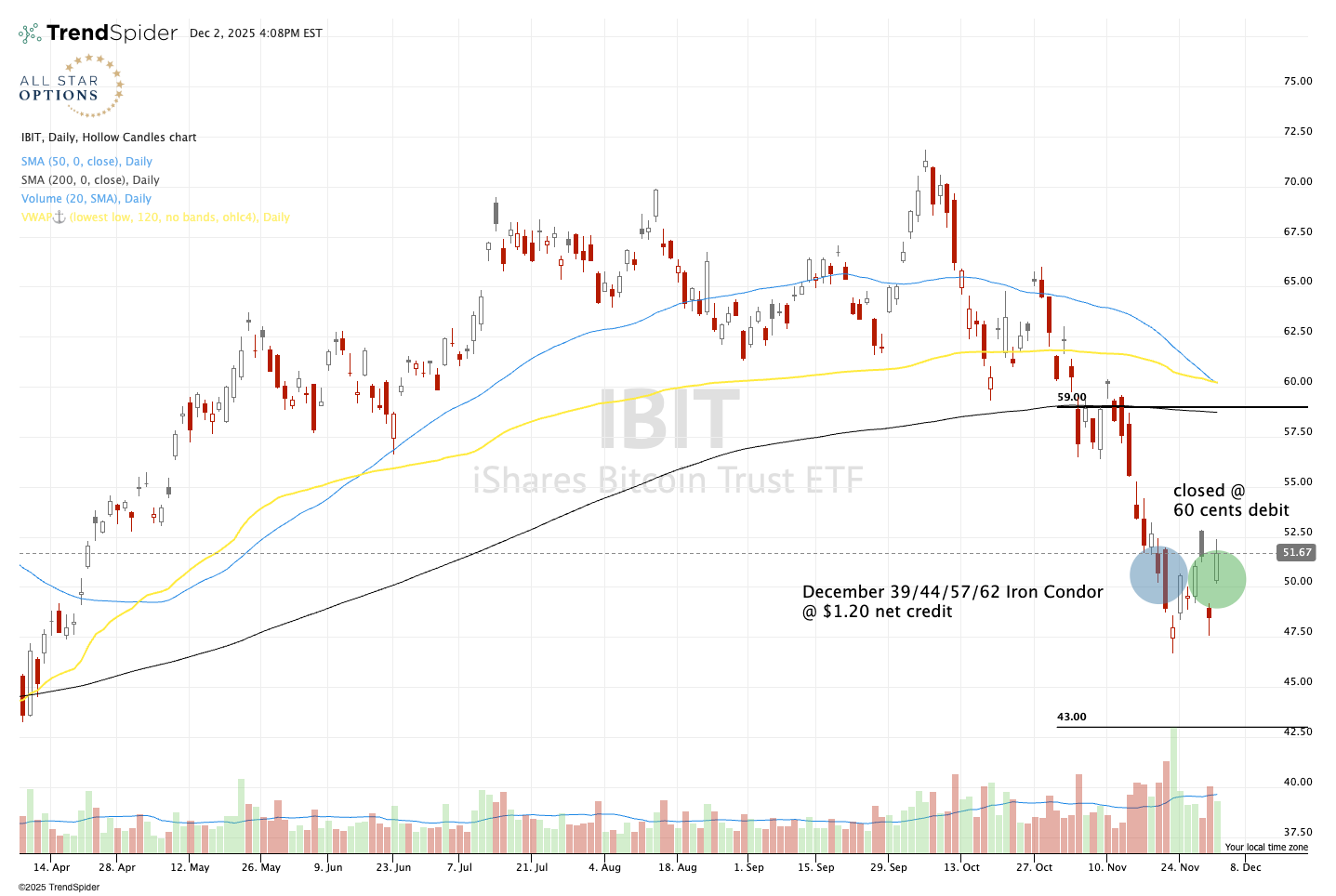
This was a trade I entered on November 19th using December expiration options.
The bet I made was that IBIT would stay stuck in a range above 43 and below 59 for at least a few weeks, and that implied volatility would decrease from elevated levels, bringing options premiums down with it.
You can see in the chart that IBIT did indeed stay within the range:
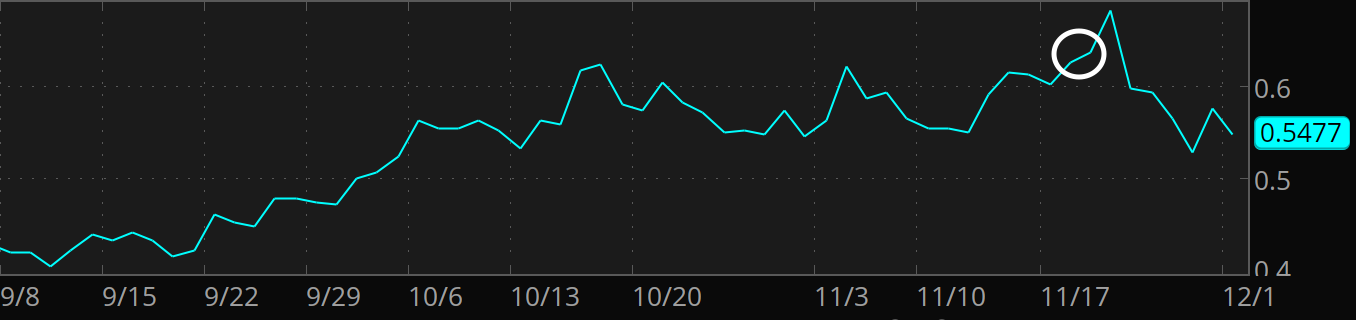
And you can see in this volatility chart that implied volatility eventually came down from where I entered, marked by the white circle:
Both conditions played out in my favor.
This delta-neutral bet in IBIT was a tactical play based on high implied volatility. When IV is elevated, it allows me to sell short strikes further away from current prices than normal, which increases my odds of success. I get paid more premium for taking on less directional risk.
When everyone is freaking out about potential moves—when options premiums are fat because traders are paying up for protection or speculation—that's often the best time to be a premium seller. You're getting compensated handsomely for risks that frequently don't materialize.
Bitcoin and crypto-related securities tend to have these periods of elevated volatility. The underlying assets are inherently volatile, and options premiums often price in even more movement than actually occurs. That creates opportunity for strategies like iron condors.
This is but one example of utilizing different tools to extract money from markets as conditions change.
When markets are trending strongly, I'm using directional strategies like calls, puts, spreads that benefit from movement. When markets are choppy and volatile, I'm deploying range-bound strategies that profit from the chop itself.
When implied volatility is elevated, I'm selling premium. When it's depressed, I'm buying premium at a discount.
Options give us options.
The real power here is not being locked into one approach regardless of conditions. Having a toolkit that allows you to adapt as the market environment shifts.
Some traders only know how to play long. They're lost when markets go sideways or down. Other traders only know how to trade volatility. They struggle when trends emerge and volatility collapses.
The goal is to be fluent in multiple strategies so you can deploy the right tool for the current conditions. Iron condors in range-bound, high-volatility environments. Directional plays when trends are clear. Calendar spreads when you need time on your side.
This IBIT trade worked because I recognized the conditions (elevated IV, range-bound price action) and matched them with the appropriate strategy. That's the skill worth developing.
Not predicting what markets will do, but recognizing what they're doing and positioning accordingly.
Congrats to those of you who joined me in this trade.
Want to learn how to deploy different options strategies based on market conditions? All Star Options teaches you not just individual trades, but how to think about which strategies work best in different environments. Join us and expand your toolkit.
--> If you'd like to receive these notes in your email, sign up here.
Sean McLaughlin | Chief Options Strategist, All Star Charts