Following a better-than-expected earnings report, Carnival $CCL fell 4.3% for its worst earnings reaction in 11 quarters. However, this came on a day when the broader market was selling off. That's how the reaction score came in slightly positive at 0.08, which means the selloff wasn’t as severe as it appeared on the surface.
Fundamentally, things are moving in the right direction for CCL. Profitability continues to improve, with net income swinging to $258M from a loss last year.
There were no S&P 500 earnings reactions to cover, so we highlighted the Q1 performance of the Magnificent 7.
Microsoft $MSFT stands out as the biggest laggard. Not only did it have the worst reaction score out of the group, but it also had the worst performance during the quarter. And the stock is trading at a new all-time low relative to the Magnificent 7 ETF $MAGS.
We saw 2 double beats in the S&P 500, but the reactions were polar opposites, and the charts explain why.
FactSet $FDS rallied 6% for its best earnings reaction since Q2 2022. This stock has already undergone a massive drawdown, and it's now trading at a key level of polarity.
On the flip side, McCormick $MKC had its 3rd consecutive negative earnings reaction and broke a key level of former support. This was the decisive resolution of a massive top.
Following a mixed earnings report, Conagra Brands $CAG had its 3rd negative earnings reaction in the last 4 quarters. The stock is now trading at the lowest level since 2009.
The biggest standout of the week came from Nike $NKE. The stock beat expectations across the board and cratered 15.5%. More importantly, this was a textbook gap-n-go to resolve one of the market's largest tops.
Friday:
Good Friday ☦️
What's happening next week 👇
We’re in that in-between window… where the bulk of earnings season is behind us, but the next wave hasn’t quite arrived yet.
That changes soon...
The big banks are up next, with names like JPMorgan $JPM set to kick things off again the week beginning on the 13th.
But before we turn the page forward, it’s worth taking a step back.
Because the real story of this earnings season isn’t what’s coming next.
The Magnificent 7, the most significant stocks in the market, are no longer leading.
Every single one of them underperformed the S&P 500 in Q1, with Microsoft $MSFT standing out as the weakest of the group.
That was the headline.
But when you zoom out to the entire sector, the picture becomes a lot more nuanced.
Technology didn’t have a bad quarter.
Not even close.
In fact, by traditional earnings metrics, it was one of the strongest sectors in the market.
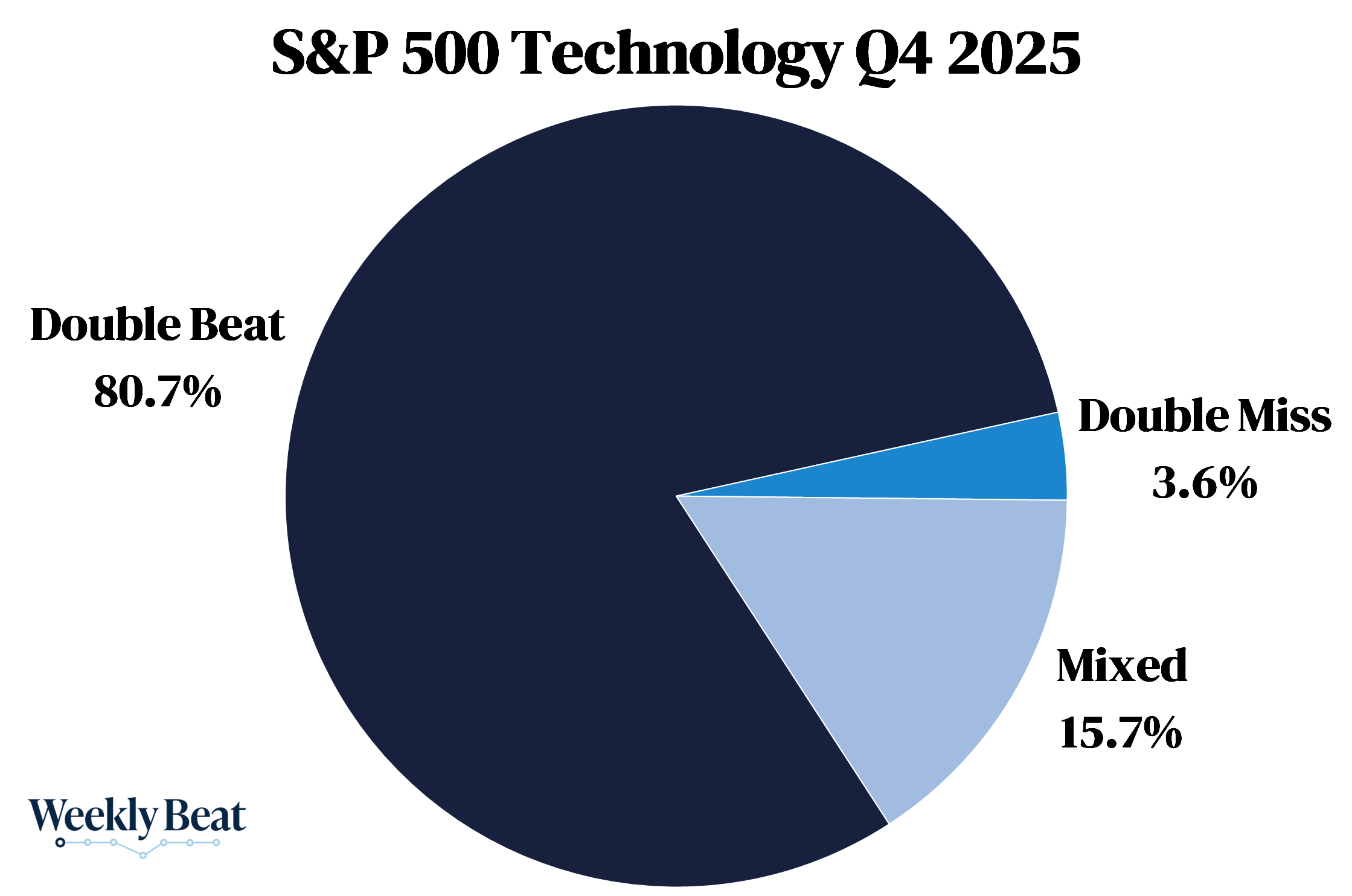
Roughly 81% of companies delivered double beats, just 3.6% posted double misses, and the rest came in mixed.
That’s about as good as it gets from a fundamental standpoint.
But here’s the part that matters.
Price didn’t always agree.
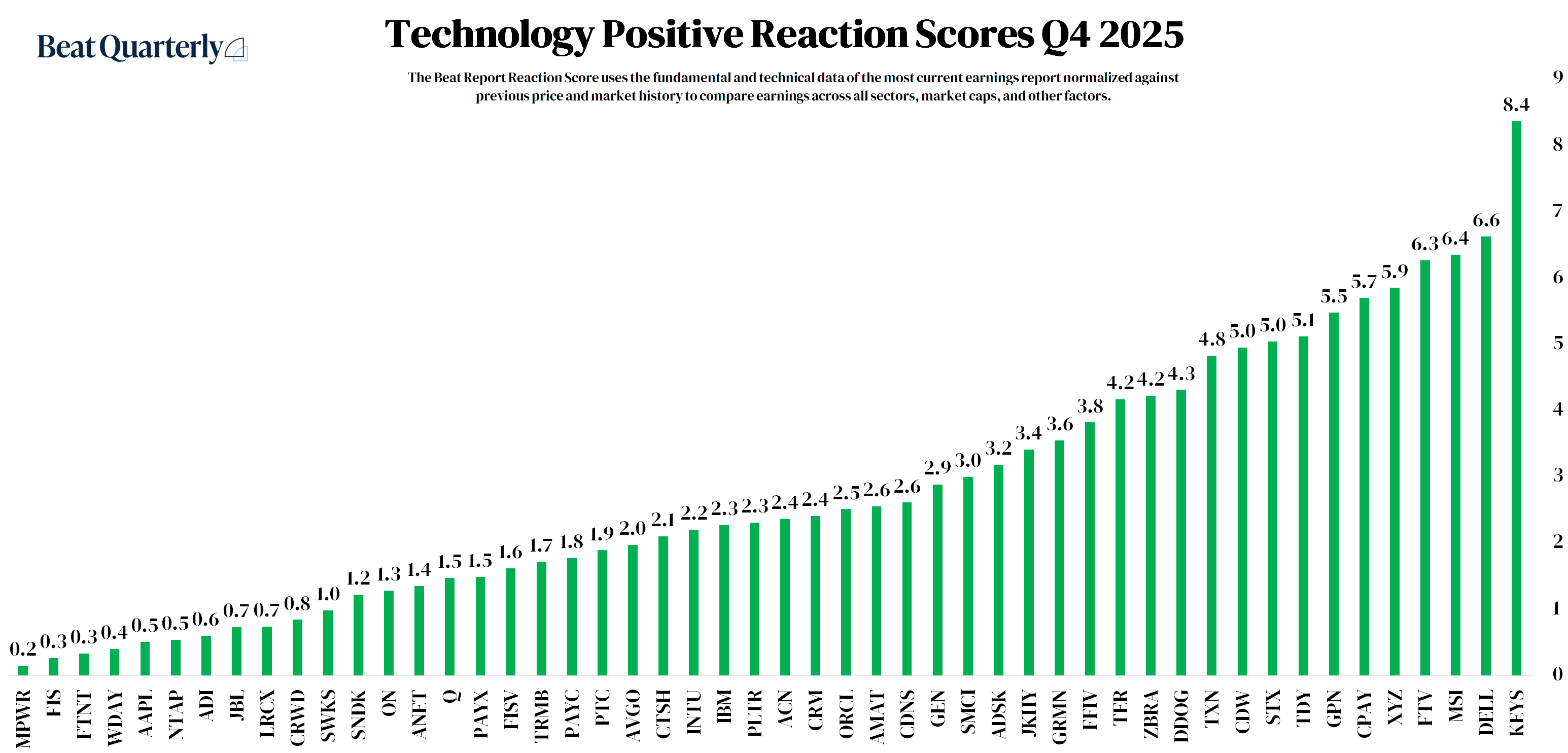
When you look at the reaction scores, you see a completely different story unfolding beneath the surface.
Yes, there were plenty of standout winners.
Names like Keysight Technologies $KEYS, Dell Technologies $DELL, and Motorola Solutions $MSI saw some of the strongest positive reactions of the entire quarter.
And they weren’t alone... The right side of the distribution is filled with stocks that were aggressively bid on good news.
That’s real demand from institutions putting money to work.
But on the other side?
It got ugly.
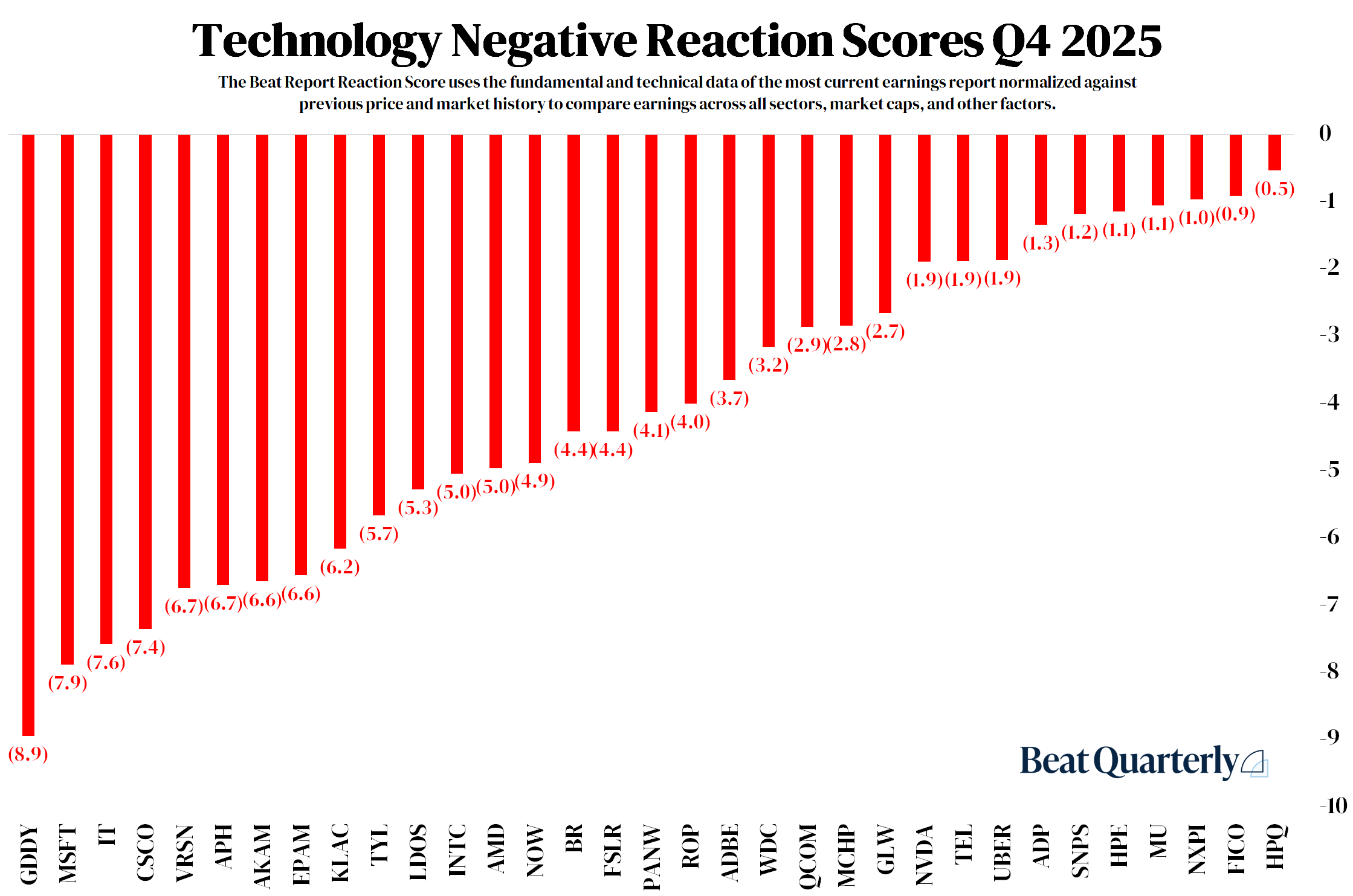
Some of the worst earnings reactions in the entire market came from the technology sector.
GoDaddy $GDDY, Microsoft $MSFT, and Gartner $IT got slammed for reporting double beats.
There was a long list of names that didn’t just sell off… they got crushed. And in many instances, they sold off on "good news."
So what gives?
How can a sector produce overwhelmingly positive earnings results… and still deliver such a mixed reaction profile?
Because this market isn’t rewarding “good.”
It’s rewarding “outstanding," and punishing everything else.
That’s the environment we’re in right now.
One where select stocks are being accumulated aggressively… while others, often right next door in the same sector, are being distributed.
In other words, we're in a stock picker’s market.
And that brings us right back to the Magnificent 7.
Because when the former leaders are showing up on the wrong side of these reaction tables, when they’re failing to attract buyers on good news, that’s information.
It shows there's an ongoing shift in leadership.
And this is exactly what we’ll be diving into in the upcoming Beat Quarterly.
We’ll break down everything that happened this earnings season, across sectors, market caps, and reaction profiles.
And more importantly, what all of this means for positioning in the months ahead.
Because the goal isn’t to own what worked in the past.
It’s to identify what’s working right now.
Earnings season may be winding down, but the opportunity set is just getting started.
Stay tuned for more from the Beat Quarterly.
That's it for this week. Thank you for reading!
-The Beat Team
P.S. Jason Perz, Sam Gatlin, and JC Parets went LIVE on Thursday to show you how they're making money from inflation
They covered where energy goes from here, what's setting up behind it, and the position-sizing framework that separates the traders who make money in commodity cycles from those who don't.
If you're serious about making money from inflation, join the growing community at the Supercycle Report for a special 62% discount before tonight's deadline.